About
Vincent Blok
Assistant Professor in Innovation and Entrepreneurship, Social Sciences Group, Wageningen University
Research fellow, faculty of philosophy, theology & religious Studies, Radboud University Nijmegen
Vincent Blok was born in 1970 in The Hague, the Netherlands. He studied Philosophy at Leiden University. In 2005 he received his Phd degree in philosophy at Leiden University with a specialization in philosophy of technology and philosophical method. From 2002 to 2006, he held various management functions in the health care sector. In 2006, he became director of the Louis Bolk Institute, an international research institute in the field of organic and sustainable agriculture, nutrition and health care. Since 2010, he is assistant professor in Innovation & Entrepreneurship at Wageningen University (The Netherlands). He teaches in the fields of Sustainable Entrepreneurship, Responsible Research & Innovation, knowledge & technology transfer and Business & Society. He is also research fellow in philosophy at the faculty of philosophy, theology & religious Studies, Radboud University Nijmegen (The Netherlands). In his philosophical research, he focusses on philosophical method, philosophical foundation of sustainable development and philosophy of management.Specializations
Philosophy
His main research area is the philosophy of technology and philosophical method. In his research, he focuses on:
- Philosophical method (phenomenology, hermeneutics, deconstructivism)
- Philosophy of language (dialogue, (non-verbal) communication, poetry, middle voice etc.)
- Environmental Philosophy
- Philosophy of will and action
- Ethics
- Philosophy of Management
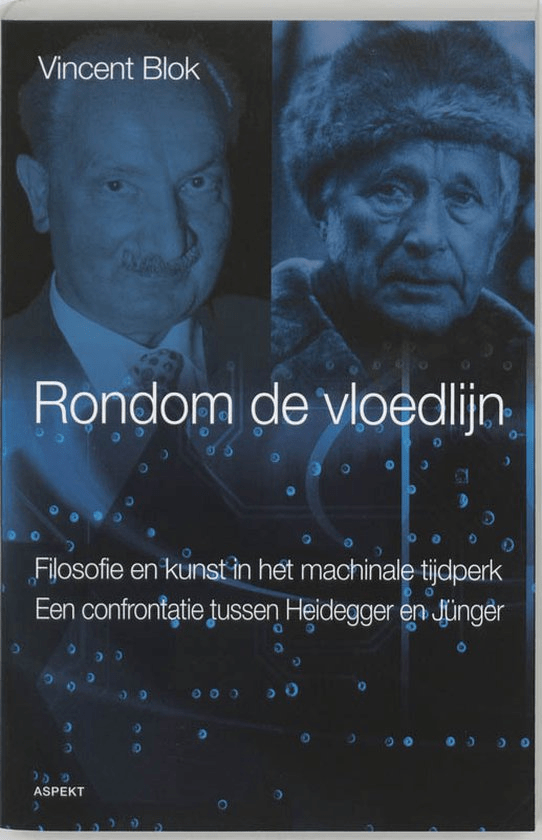
- Martin Heidegger
- Ernst Junger
Management Science
His main research area is innovation and entrepreneurship. In his research, he focuses on:
- Sustainable Entrepreneurship
- Responsibility Research & Innovation
- Business & Society
- Knowledge intensive entrepreneurship
- The entrepreneurial University
- Entrepreneurship and Development
- Business ethics
Additional Functions
- Empedocles, European Journal for the Philosophy of Communication (member of the editorial board)
- Bulletin Heideggerien (Bhdg)( member of the editorial board)
Full Academic CV
Coming soon!
Networks
- Dutch Society for Phenomenology (member of the board)
- Empedocles, European Journal for the Philosophy of Communication (member of the editorial board)
- Bulletin Heideggerien (Bhdg)( member of the editorial board)
- Wageningen School of Social Sciences (member)
- Academy of Management (member)
- International Association for Environmental Philosophy (member)
- Dutch Society for Environmental Philosophy (member)
- Heidegger Gesellschaft (member)
Make your choice:
Welcome

Vincent Blok
Assistant Professor in Innovation and Entrepreneurship, Social Sciences Group, Wageningen University Research fellow, faculty of philosophy, theology & religious Studies, Radboud University Nijmegen
Research Interests
News
Courses
Principles of Entreneurship (BSc.)
The course “Principles of Entrepreneurship” concentrates on the key concepts and the creation of insight in the field of entrepreneurship. The course presents a variety of topics related to entrepreneurship: the entrepreneur and the entrepreneurial mind, business start up and the different stages of the entrepreneurial process. The process approach provides a helpful framework for the analysis and understanding of entrepreneurship and entrepreneurial activities over time. Special attention is given to specific issues such as social entrepreneurship, entrepreneurship & innovation and entrepreneurship in developing countries.
Selling Science & Technology (BSc.)
A major challenge in every science & technology driven industry is the continuous development of new products based on new scientific achievements. This challenge requires bridging the gap between the organizations that do fundamental and applied research (universities, academic hospitals, research institutes and industrial research departments) and those that develop the products and the business (existing and newly created companies). The increasing pressures to align science and new knowledge production with societal and/or business needs, and to scale up the commercialization effort implies that both scientists and people in business can benefit from a better understanding of linkages between science and business. The BSc-course Selling Science & Technology familiarizes students with the interplay between the production of science and technology and the commercialization of academic knowledge and designs by universities, R&D labs, start-up firms and established companies. It will help students to understand the gaps between the different worlds of science and business, and how the two domains can be aligned.
Business & Society (MSc.)
The world is changing quickly and so are the challenges tomorrow’s entrepreneurs and business professionals face. One of these challenges is that a company’s license to operate and grow is no longer seen in terms of maximizing economic profits alone. Increasing social and environmental pressures provide opportunities for sustainable entrepreneurship and the development of more responsible businesses which are embedded and accepted in society. To prepare future entrepreneurs and business professionals for this challenge, the impact of business on society and society on business is explored in a new course, called Business and Society. In this course the mutual interdependent relationship between business and society is central.
New Venture Creation (MSc.)
Students with a real or potentially innovative business idea are guided in the process of elaborating their idea, analysing its future market potential, and preparing and writing a business plan. The purpose of this course is to give students insight into the processes underlying entrepreneurship in independent or autonomous start-ups and future medium sized companies. There will be a special focus on opportunity identification and business case simulation, and other skills relevant for planning a new business venture (e.g. creativity, market testing, impression management, etc.). The course reviews different approaches to feasibility analysis that can be carried out before the potential entrepreneur embarks on preparing the full-blown business plan. The course then introduces students to the financing of the start-up where to go for start-up and growth capital, with special emphasis on bootstrapping and venture capital. Franchising, licensing, acquisition of an on-going enterprise, and new product development represent different specific strategies various entrepreneurs have used to start and/or stimulate the growth of their businesses. During the course students will develop a plan for a new enterprise. This plan should be feasible and have the potential to generate substantial revenues, cash and profits. The venture should be able to provide a competitive remuneration for the founders.
Projects
Societal Acceptance of (genetic) alternatives to the killing of male chicks
Post-doc project Marielle Bruijnis
Entrepreneurship and Microfinance
Project title: Human Collateral and Microfinance. The impact of entrepreneurial training and monitoring evaluation on micro client performance at the base of the pyramid
Project period: 2012 – 2016
Partners: NUFFIC
Team members: Daniel Agbeko MBA (PhD. candidate), prof. dr. Onno Omta (promotor), dr. Vincent Blok MBA (co-promotor)
Summary of the Project:
Entrepreneurs at the Base of the Pyramid (BoP) have limited access to credit because Micro Finance Institutions (MFI) require the 5 C’s – collateral, credit history, capital, cash flow statement and character reference – before providing credit. Because existing solutions to this problem like social collateral (group lending arrangements) seem to be unsustainable, the present study introduces human collateral as a possible substitute for, or extension to, financial and social collateral, by studying the impact of entrepreneurial training of micro credit clients combined with monitoring by MFI officers of micro client performance.
A two-step longitudinal survey will be conducted. 160 loan clients will be randomly selected from a population of over 600 clients of uniCredit Ghana . A baseline survey with regard to client entrepreneurial competences, business knowledge and loan repayment history will be executed including all 160 clients. They will then be randomly divided into 4 groups of 40 clients .
1. clients receiving monitoring only,
2. those receiving entrepreneurial training only,
3. those receiving both treatments and
4. those receiving no treatment ( control group).
A second survey will be conducted after a year to see the effect of the different interventions. It is expected that loan clients provided with treatments three will show the best loan repayment, followed by treatment one and two, whiles the control group will show the lowest loan repayment level. Data will be analysed, using Partial Least Square regression analysis.
For more information: vincent.blok@wur.nl
Social Entrepreneurship and Responsible Innovation
Project title: Using social entrepreneurs as successful change agents in responsible innovation to
create sustainable city systemsPeriod: 2013 – 2017
Partners: Climate KiC
Team members: Rob Lubberink (PhD. candidate), prof. dr. Onno Omta (promotor), dr. J. van Ophem (co-promotor), dr. Vincent Blok MBA (co-promotor)
Summary of the Project
Sustainable city systems can be defined as city systems designed with consideration of environmental impact, dedicated to minimize the required inputs of energy and water and the outputs of waste, heat, air and water pollution. Innovation is generally regarded as the key to achieve sustainable city systems. This PhD project is designed to deepen our understanding how to create capacity for innovation through collaborative problem solving and idea generation around all aspects of the design, implementation and regulation of local, sustainable solutions for cities. It aims to provide insights how cities can address the barriers that prevent large scale uptake of sustainable technologies. It is our view that the common thread are not the ideas themselves -for ideas are often the easiest part of innovation- but “how” these ideas are made to happen. There are not just technological innovations needed but also new business models with new ways of working that place citizens at the heart of the city (Sustainable City Systems Platform Strategic Plan, 2013). Therefore, the present PhD project starts from the concept of responsible innovation, the process that incorporates the relevant societal and ethical aspects right from the beginning (NWO, 2012). It is understood as “a strategy of stakeholders to become mutually responsive to each other and anticipate research and innovation outcomes underpinning the ‘grand challenges’ of our time for which they share responsibility” (Von Schomberg, 2013). As societal and ethical aspects have to be included right from the beginning, it is important to involve the public in the innovation process. Since the model of responsible innovation guides multi-stakeholder involvement, we expect that it can be applied to realize successful public participation as well.
For more information: vincent.blok@wur.nl.
Societal Acceptance of (genetic) alternatives to the killing of male chicks
Project title: The societal acceptance of the Combination chicken and sexing un-incubated eggs through genetic modification.
Project period: 2013 – 2014
Partners: NWO
Team members: Marielle Bruijnis (Post-doc), prof. dr. Bart Gremmen, dr. Vincent Blok MBA
Summary of the Project:
In the Netherlands over 45 million male chicks annually are killed immediately after hatching, This mass killing raises discussions. The public would prefer an alternative that would sex un-incubated eggs or less-specialised chicken. DLO will start research into alternatives to the culling of male chicks: the GM chicken and the Combination chicken. Both alternatives have societal consequences and also may be problematic from an ethical perspective. The general research question of our project is how to integrate the technical- , social- and ethical aspects of the two alternatives to the killing of male chicks through a joint, interdisciplinary and integrated approach to achieve best animal welfare. The overall aim of the project is to provide researchers and stakeholders with a conceptual framework and strategies that will help them to understand, evaluate and monitor the integration of the technical-, social- and ethical aspects of the two alternatives to the killing of male chicks (think of insight in success and failure factors and boundary conditions to certain strategies) as well as recommendations for policy makers on how to facilitate research initiatives on alternatives in their attempt to gain public support. The project comprises an interdisciplinary effort through a post-doc project addressing the fundamental knowledge gaps, and one (part-time) DLO project to ensure integrated knowledge development with stakeholder participation at the applied level. As part of the project a series of workshops with all project participants and the valorisation panel will be organized to integrate the new scientific knowledge, emerging from the PostDoc-project.For more information: vincent.blok@wur.nl
Business Models for Smalholder Inclusion
Project title: Business Models for Smallholder Inclusion.
Project period: 2012 – 2016
Collaboration Partners: Rabobank
Team members: August-Sjauw-Koen-Fa (PhD. Canditate), prof. dr. Onno Omta (promotor), dr. Vincent Blok MBA (co-promotor)
Summary of the Project:
Various comprehensive scientific studies confirm that it is possible to meet global food requirements by 2050 without extensive (cultivation of) new land. Most of the additional required food can be realised by improving the low crop yields on existing agricultural land, especially from many low and middle income countries. This food strategy will entail improving small farm holdings that constitute the great majority of the farms and cultivate up to 80 percent of the agricultural land of the developing world.
The challenge lies in the fact that agriculture must produce more food with less resources in a way that is environmentally sustainable, economically viable and socially responsible. The aspiration of the private sector in general and the MNEs of the F&A sector in particular is to achieve a 20% improvement each decade in terms of economic growth and opportunity, agricultural productivity and nutrition, while simultaneously reducing the environmental footprint by 20% (WEF, 2011, 2012). This gives rise to the question: Do large F&A companies (MNEs) have the ability to achieve this goal and, if so, how? With a view to unlocking the full potential of smallholder agriculture, access to affordable financial services is moreover essential in order to meet smallholders’ investment and working capital requirements. Rural financial markets and outreach are, however, very poor in many developing countries. So how can access to financial services be provided to smallholders?
The aim of this research project is to define a business model for smallholder inclusion in local and global food value chains in an economically viable way that meets environmental sustainability and social responsibility requirements from a business perspective, thus making companies ‘an integrated part of the solution’ themselves.
The research method used for defining a business model for smallholder inclusion is a case study comprising three facets, namely desk research, empirical research and conclusions. The focus will be on the business cases of leading EU-based F&A MNEs in Asia and Sub-Saharan Africa. The drivers, fundamentals, principles and building blocks will be explored. The appropriate business structures (contractual relationships), interventions and financial aspects (investments, rationales, financing constructions and the turning point to financial stability) of the value chain model will be assessed. The role of stakeholders in the value chain and the local private sector, including the producers’ organisations, banks, governments and civil society, will also be examined. In-depth interviews will be conducted with business managers from different levels of the involved MNEs and banks in order to obtain strategic business information. The form of publication will be a dissertation and four articles published in scientific journals.
More information: vincent.blok@wur.nlCompetence Framework for Sustainable Entrepreneurship
Project title: Competence Framework for Sustainable Entrepreneurship
Project period: 2013 – 2017
Collaboration Partners: Euregio Rijn-Waal, HAN Hogeschool, Universitaet Duisburg-Essen
Team members: Lisa Ploum (PhD. Canditate), prof. dr. Onno Omta (promotor), dr. Thomas Lans (co-promotor), dr. Vincent Blok MBA (co-promotor)
For more Information: vincent.blok@wur.nl
Enhancing Innovation and Entrepreneurship in Benin
Project title: Enhancing Innovation and Entrepreneurship in Benin’s Agri-Food Supply Chain
Project period: 2013 – 2017
Partners: NUFFIC
Team members: Waliou Yessoufou (PhD. candidate), prof. dr. Onno Omta (promotor), dr. Vincent Blok MBA (co-promotor)
Publications 2013
Scientific Papers
- Lans, T., Blok, V., Wesselink, R., „Learning Apart Together: Towards an Integrated Competence Framework for Sustainable Entrepreneurship in Higher Education“, Journal of Cleaner Production (download).
- Blok, V., “The Power of Speech Acts: Reflections on a Performative Concept of Ethical Oaths in Economics and Business”, Review of Social Economy, 71(2)(2013), pp. 187-208 (download)
- Blok, V., Lemmens, P., “Critical Reflections on the Concept of Responsible Innovation”. In: J. van den Hoven et al. (ed.), Responsible Innovation, Volume 2 (Dordrecht: Springer 2013)(forthcoming).
- Blok, V., Lubberink, R., Lans, T., Omta, O., „Managing the Improvement of Entrepreneurship Education Programs. A Comparison of Universities in the Life Sciences in Europe, USA and Canada. In: A. Fayolle, D.T. Redford (ed.), Handbook of Research in Entrepreneurship Education. Volume 4: Entrepreneurial University Handbook (Northampton: Edward Elgar 2013)(forthcoming)
- Houterman, J., Blok, V., Omta, O., „Venture Capital Financing of Techno-Entrepreneurial Start-Ups. Drivers and Barriers for Investments in Research-based Spin-offs in the Dutch Medical Life Sciences Industry”, in: Therin, F. (ed.), Handbook of Research on Techno-Entrepreneurship, second volume (Northhampton: Edward Elgar 2013)(forthcoming)
- Hulsink, W., Dons, H., Lans, T., Blok, V., „Boosting Entrepreneurship Education within the Knowledge Network of the Dutch Agri-Food Sciences: The new ‚Wageningen’ approach“. In: A. Fayolle, D.T. Redford (ed.), Handbook of Research in Entrepreneurship Education. Volume 4: Entrepreneurial University Handbook (Northampton: Edward Elgar 2013)(forthcoming)
Publications 2012
Scientific Papers
- Dentoni, D., Blok, V., Lans, T., Wesselink, R., „Developing Human Capital for Agri-Food Firms’ Multi-Stakeholder Interactions“, International Food and Agribusiness Management Review, Vol. 15 (2012), pp.61-68 (download).
- Thijssen, S., Blok, V., Pascucci, S., “Unpacking Incubation Elements and Management Practices”, in: Duysters, G., Hoyos, A. de, Kaminishi, K. (ed.), Proceedings of the 9th International Conference on Innovation and Management (Wuhan: Wuhan University of Technology Press 2012), pp. 153-166 (download).
- Wubben, E.F.M., Runge, N.A., Blok, V., “From Waste to Profit. An interorganisational perspective on drivers for biomass valorization”, Journal of Chain and Network Science, Vol. 12 (3) (2012), 261-272 (download).
Scientific Reports
Business & Society
Recent Publications
- Blok, V., “The Power of Speech Acts: Reflections on a Performative Concept of Ethical Oaths in Economics and Business”, Review of Social Economy, 71(2)(2013), pp. 187-208 (download)
- Blok, V., Lemmens, P., “Critical Reflections on the Concept of Responsible Innovation”. In: J. van den Hoven et al. (ed.), Responsible Innovation, Volume 2 (Dordrecht: Springer 2013)(forthcoming).
Business Ethics
Recent Publications
- Blok, V., “The Power of Speech Acts: Reflections on a Performative Concept of Ethical Oaths in Economics and Business”, Review of Social Economy, 71(2)(2013), pp. 187-208 (download)
- Blok, V., Lemmens, P., “Critical Reflections on the Concept of Responsible Innovation”. In: J. van den Hoven et al. (ed.), Responsible Innovation, Volume 2 (Dordrecht: Springer 2013)(forthcoming).
Knowledge intensive entrepreneurship
Publications
- Thijssen, S., Blok, V., Pascucci, S., “Unpacking Incubation Elements and Management Practices”, in: Duysters, G., Hoyos, A. de, Kaminishi, K. (ed.), Proceedings of the 9th International Conference on Innovation and Management (Wuhan: Wuhan University of Technology Press 2012), pp. 153-166 (download).
- Houterman, J., Blok, V., Omta, O., „Venture Capital Financing of Techno-Entrepreneurial Start-Ups. Drivers and Barriers for Investments in Research-based Spin-offs in the Dutch Medical Life Sciences Industry”, in: Therin, F. (ed.), Handbook of Research on Techno-Entrepreneurship, second volume (Northhampton: Edward Elgar 2013)(forthcoming)
Responsibility Research & Innovation
Recent Publications
- Blok, V., Lemmens, P., “Critical Reflections on the Concept of Responsible Innovation”. In: J. van den Hoven et al. (ed.), Responsible Innovation, Volume 2 (Dordrecht: Springer 2013)(forthcoming).
- Blok, V. “Finding Common Ground in Case of Conflicts of Interest. The Voice of the Other in Communication and Negotiation Processes”. Paper presentation at the3rd Global Conference Communication and Conflict, September 5-7, 2013, Mansfield College, Oxford (UK)
Entrepreneurship and Development
Recent Publications
- Dolderen, J., Blok, V., Kemp, R., Omta, O., “Assessing entrepreneurship and performance of microcredit clients in Ghana. The influence of business operations skills”, Paper presentation at the Academy of Management Africa Conference (AOM Africa), 7-10 January 2013, Johannusburg (South-Africa)(download).
- Lans, T., Blok, V., Wesselink, R., „Learning Apart Together: Towards an Integrated Competence Framework for Sustainable Entrepreneurship in Higher Education“, Journal of Cleaner Production (download).
Sustainable Entrepreneurship
Recent Publications
- Lans, T., Blok, V., Wesselink, R., „Learning Apart Together: Towards an Integrated Competence Framework for Sustainable Entrepreneurship in Higher Education“, Journal of Cleaner Production (download).
- Wesselink, R., Blok, V., Lans, T., Dentoni, D., “Individual competencies underpinning the change towards sustainability”, Paper presentation at the European Roundtable on Sustainable Production and Consumption & Environmental Management for Sustainable Universities (ERSCP-EMSU) conference, 4-7 June 2013, Istanbul (Turkey).
The entrepreneurial University
Recent Publications
- Blok, V., Lubberink, R., Lans, T., Omta, O., „Managing the Improvement of Entrepreneurship Education Programs. A Comparison of Universities in the Life Sciences in Europe, USA and Canada. In: A. Fayolle, D.T. Redford (ed.), Handbook of Research in Entrepreneurship Education. Volume 4: Entrepreneurial University Handbook (Northampton: Edward Elgar 2013)(forthcoming)
- Hulsink, W., Dons, H., Lans, T., Blok, V., „Boosting Entrepreneurship Education within the Knowledge Network of the Dutch Agri-Food Sciences: The new ‚Wageningen’ approach“. In: A. Fayolle, D.T. Redford (ed.), Handbook of Research in Entrepreneurship Education. Volume 4: Entrepreneurial University Handbook (Northampton: Edward Elgar 2013)(forthcoming)
Recent Projects
Paper Presentations 2013
- Blok, V. “Finding Common Ground in Case of Conflicts of Interest. The Voice of the Other in Communication and Negotiation Processes”. Paper presentation at the3rd Global Conference Communication and Conflict, September 5-7, 2013, Mansfield College, Oxford (UK)(more information)
- Blok, V., ”Enhancing the License to Operate. Towards a Performative Concept of Ethical Codes and Codes of Conduct”. Paper Presentation at the Annual Conference of the European Business Ethics Network (EBEN) 2013, September 12-14 2013, Lille (France)
- Blok, V., Belt, H. van den, Lemmens, P., “The Unbearable Lightness of Responsible Innovation”. Paper presentation at the GREAT (Governance of Responsible Innovation) Kick-off meeting, 5 february 2013, Brussels (Belgium)(more information)
- Blok, V., Lemmens, P., “Critical Reflections on the Concept of Responsible Innovation”. Paper presentation at the 2013 IEEE International Technology Management Conference & 19th ICE Conference, 24-26 June 2013, The Hague (The Netherlands (more information)
- Bruijnis, M., Gremmen, B., Blok, V., Stassen, E., “Ethical- and social aspects of two alternatives to the killing of male chicks”, paper presentation at the annual meeting of the EAAP, August 28, 2013, Nantes (France) (more information)
- Leur, S. van, Dentoni, D., Blok, V., Wesselink, R., Lans, T., “Developing Stakeholder Orientation in Agribusiness: From Human Capital to Organizational Capabilities”. Paper Presentation at the 23nd Annual World Symposium of the International Food and Agribusiness Management Association (IFAMA), 17-18 June 2013, Atlanta (US)(more information).
- Leur, S. van, Dentoni, D., Blok, V., Wesselink, R., Lans, T., “People make the Difference! Individual Competencies making organizations stakeholder oriented”, Paper presentation at the European Roundtable on Sustainable Production and Consumption & Environmental Management for Sustainable Universities (ERSCP-EMSU) conference, 4-7 June 2013, Istanbul (Turkey).
- Dolderen, J., Blok, V., Kemp, R., Omta, O., “Assessing entrepreneurship and performance of microcredit clients in Ghana. The influence of business operations skills”, Paper presentation at the Academy of Management Africa Conference (AOM Africa), 7-10 January 2013, Johannusburg (South-Africa)(more information)
- Lubberink, R., Blok, V., Ophem, J. van, Omta, O., “The Impact of Domestic Drivers and Barriers on the Entrepreneurial Start-up Decision”, Paper presentation at the 5th ELab Symposium on Family Entrepreneurship: a New Field of Research”, June 5 2013, Lyon (France).
- Osagie, E., Wesselink, R., Blok, V., Lans, T., Mulder, M., “Individual Competencies for Corporate Social Responsibility”. Paper Presentation at the CSR Research Seminar, May 23-24, 2013, Louvain Shool of Management, Louvain (Belgium)(more information).
- Studynka, O., Blok, V., Wesselink, R., Kemp, R., “Encouraging Sustainability in the Workplace. A Survey on the Pro-environmental Behaviour of University Employees”, Paper presentation at the European Roundtable on Sustainable Production and Consumption & Environmental Management for Sustainable Universities (ERSCP-EMSU) conference, 4-7 June 2013, Istanbul (Turkey)(more information)
- Wesselink, R., Blok, V., Lans, T., Dentoni, D., “Individual competencies underpinning the change towards sustainability”, Paper presentation at the European Roundtable on Sustainable Production and Consumption & Environmental Management for Sustainable Universities (ERSCP-EMSU) conference, 4-7 June 2013, Istanbul (Turkey)(more information).
Paper Presentations 2012
- Blok, V., “The Limits of Partnership. The Ideal of Unity and Harmony in Cross-Sector Partnerships for Sustainability”. Paper Presentation at the 8th Philosophy of Management International Conference 2012, 19-22 July 2012, Oxford (UK)(more information)
- Blok, V., “More commitment, Please! Reflections on a performative concept of professional Oaths and Codes of Conduct in Economics and Business”. Paper presentation at the conference on Oaths and Codes in Economics and Business, 11-12 May, Groningen (The Netherlands)(download)
- Blok, V., “Look who’s talking. The voice of the Other in communication and negotiation processes”. Paper Presentation at the 4th European Communication Conference (ECREA), 24-27 October, Istanbul (Turkey)(more information)
- Blok, V., Belt, H. van den, Lemmens, P., “Responsible Innovation? Towards a Critique of the Concept of Innovation”. Paper Presentation at the Conference Responsible Innovation, 13-14 December, The Hague (The Netherlands)(more information).
- Blok, V. Veldhuizen, M., Dentoni, D., “Look who’s talking too. Or how to respect conflicts of interest between cross-sectoral partners in communication and negotiation processes”. Paper Presentation at the 4th European Communication Conference (ECREA), 24-27 October, Istanbul (Turkey)(more information)
- Aanstoot, R., Blok, V., Dentoni, D., “Negotiation processes in multistakeholder alliances”. Paper presentation at the 19th annual conference on Multi-organisational Partnerships, Alliances and networks (MOPAN), July 2-4 2012, Wageningen (The Netherlands)(more information)
- Lemmens, P, Blok, V., Belt, H. van., Gremmen, B., “Questioning the bio-based economy. Philosophical reflections on the assumptions of a dominant policy narrative”, Paper presentation at the ESF conference: Towards a sustainable bio-based society, 6-7 December 2012, Amsterdam (The Netherlands)(more information)
- Runge, N., Wubben, E., Blok, V., “From Waste to Profit. An interorganisational perspective on drivers for biomass valorization”. Paper presentation at the WICaNEM conference, 23-25 May 2012, Wageningen (The Netherlands)(more information).
- Osagie, E.R., Wesselink, R., Tobi, H., Blok, V., Lans, T., “Identification of Individual Competencies for Sustainability and Corporate Social Responsibility: A Review”. Paper presentation at the Annual meeting of the American Educational Research Association (AERA), 13-17 April 2012, Vancouver (Canada).
- Thijssen, S., Blok, V., Pascucci, S., “Unpacking Incubation Elements and Management Practices”. Paper presentation at the International Conference on Innovation and Management (ECIM), 14-16 November 2012, Eindhoven (The Netherlands)
- Veldhuizen, M., Blok, V., Dentoni, D., “Multi-stakeholder interaction as a source for sustainable development: organisational drivers determining firms´ ´stakeholder dialogue´ and ´knowledge integration´ capabilities“. Paper presentation for the 22nd Annual World Symposium of the International Food and Agribusiness Management Association (IFAMA), 11-12 Juny 2012, Shanghai (China)(more information).
Welcome

Vincent Blok
Assistant Professor in Innovation and Entrepreneurship, Social Sciences Group, Wageningen University
Research fellow, faculty of philosophy, theology & religious Studies, Radboud University NijmegenResearch Interests
News
Courses
Business & Society (MSc.)
The world is changing quickly and so are the challenges tomorrow’s entrepreneurs and business professionals face. One of these challenges is that a company’s license to operate and grow is no longer seen in terms of maximizing economic profits alone. Increasing social and environmental pressures provide opportunities for sustainable entrepreneurship and the development of more responsible businesses which are embedded and accepted in society. To prepare future entrepreneurs and business professionals for this challenge, the impact of business on society and society on business is explored in a new course, called Business and Society. In this course the mutual interdependent relationship between business and society is central.
Projects
Post-metahical Reflections on the Constitution of Meaning
Book project.
Societal Acceptance of (genetic) alternatives to the killing of male chicks
Post-doc project Marielle Bruijnis
Philosophical Reflections on the Essence of Sustainable Development
Project title: Book-project Philosophical Reflections on the Essence of Sustainable Development (Working title)
Project period: – 2018
If one thing becomes clear in the current discussion about sustainable development and especially about more sustainable/ecological behaviour, it is that the concept itself and its implications are philosophically underdeveloped. In this research project, three main themes will be discussed:
1) Critical analysis on the concept of time which is presupposed in the concept of sustainable development, and philosophical reflections on a non-metaphysical concept of sustainability.
2) Critical analysis of the concept of nature which is presupposed in the concept of sustainable development, and philosophical reflections on a non-metaphysical concept of nature.
3) Critical reflction on the concept of human accountability/responsibility which is presupposed in the concept of sustainable development, and philosophical reflections on a non-metaphysical concept of human responsibility .
In the course of this research project, various articles will be written which will result in a book. Examples of already published articles:
- Blok, V., “Die Faktizität der Natur. Der philosophische Sinn der Natur als Antwort auf den Nihilismus”, Jünger-Studien, No. 5 (2011), pp. 40-54 (download)
- Blok, V., “Don’t get me wrong. The Heidegger and radical environmentalism debate revisited”. Paper Presentation at the 51th meeting of the Society for Phenomenology and Existential Philosophy (SPEP), 1-3 November, Rochester (USA)(more information).
- Blok, V., “The ecological crisis and the ‘affordance’ of nature”. Paper Presentation at the 16th Annual Meeting of the International Association for Environmental Philosophy, 3-5 november, Rochester (USA)(more information)
Ernst Jünger and the Essence of Language
Project title: Book-project Ernst Jünger and the Essence of Language (Working title)
Project period: – 2014
Point of departure of this research project is Martin Heidegger’s criticism that Ernst Jünger is unable to overcome nihilism. According to Heidegger, this involves a radical change of the method of philosophy as well as our concept of the essence of language. The central intuition of this research project is that Jünger’s work already demonstrates a radical other method of philosophy, as well as a new concept of the essence of language. In this research project, we analyze and discuss Jünger’s concept of language in relation to the current philosophical debate on language and meaning. In the course of this research project, various articles will be written which will result in a book.
Examples of already published papers:
- Blok, V., “Stereoskopie und Trigonometrie. Jüngers Methode im Licht des Sizilischen Briefes an den Mann im Mond“. In: Zarska, N., Diesener, G., Kunicki, W. (ed.), Ernst Jünger – eine Bilanz (Leipziger Universitätsverlag: Leipzig 2010), pp. 58-73 (download).
- Blok, V., “Kontroverse über die Sprache – Die Einseitigkeit von Heideggers Auseinandersetzung mit Ernst Jünger”, Existentia, Vol. XVII (2007), pp. 19-30 (download)
- Blok, V., “Der ontologische Sinn der Gestalt. Zum Verständnis des Arbeiters”, Les Carnets Ernst Jünger, Vol. 10 (2005), pp. 173-192 (download)
Post-metaphysical Reflections on the Constitution of Meaning
Project title: Book-project Post-metaphysical Reflections on the Constitution of Meaning (Working title)
Project period: - 2015Central question of this research project is the constitution of meaning in the 21. century and the role philosophy, art and science play in this process. Three main questions will be answered in this project: 1) What are the characteristics of a post-metaphysical concept of meaning (Sinn)? 2) What is the nature of the constitution of meaning and what is the role of philosophy, art and science in this process? 3) What is the role of actual human behaviour in this process of meaning constitution.
In the course of this research project, various articles will be written which will result in a book. Examples of already published papers:
- Blok, V., “Establishing the Truth: Heidegger’s Reflections on Gestalt”, Heidegger Studies, Vol. 27 (2011), pp. 101-118 (download)
- Blok, V., “De andere Anfang van de filosofie. Kritische kanttekeningen bij Heideggers filosofische methode”, Algemeen Nederlands tijdschrift voor de wijsbegeerte 4 (2010), pp. 226-244 (download)
- Blok, V., “Communication or Confrontation. Heidegger and philosophical Method”, Empedocles, Volume I (2009), pp. 43-57 (download).
Publications 2013
Scientific Papers
- Blok, V., „Towards the rehabilitation of will in contemporary philosophy. Heidegger’sphenomenology of the will revisited“, The Journal of the British Society for Phenomenology (forthcoming)
- Blok, V., “The Power of Speech Acts: Reflections on a Performative Concept of Ethical Oaths in Economics and Business”, Review of Social Economy, 71(2)(2013), pp. 187-208 (download)
- Blok, V., “Gestalt und Name. Zu Jüngers Überwindung der Metaphysik”. In: A. Benedetti, L. Hagestedt (ed.), Totalität als Faszination: Systematisierung des Heterogenen im Werk Ernst Jüngers (Berlin: De Gruyter 2013)(forthcoming).
- Blok, V., „Denken als Handlung. Heideggers Besinnung auf das Wesen des Menschen im Zeitalter des Human Enhancements“, Heidegger Jahrbuch (forthcoming)
- Blok, V., Lemmens, P., “Critical Reflections on the Concept of Responsible Innovation”. In: J. van den Hoven et al. (ed.), Responsible Innovation, Volume 2 (Dordrecht: Springer 2013)(forthcoming).
Reviews
Publications 2012
Scientific Papers
Interviews
- Een filosofische kijk op een duurzame samenleving, Interview met Vincent Blok, Dichterbij, Magazine voor leden van de Rabobank Zuid-Holland Midden, winter 2012, 18-20
Publications 2011
Scientific Papers
- Blok, V., “An indication of Being – Reflections on Heidegger’s Engagement with Ernst Jünger”, The Journal of the British Society for Phenomenology, Vol. 42, No. 2 (2011), pp. 194-208 (download)
- Blok, V., “Der ‘Religiöse’ Charakter von Heideggers philosohischer Methode: Relegere, Re-eligere, Relinquere”, Studia Phaenomenologica, Vol. XI (2011), pp. 285-307 (download)
- Blok, V., “Establishing the Truth: Heidegger’s Reflections on Gestalt”, Heidegger Studies, Vol. 27 (2011), pp. 101-118 (download)
- Blok, V., “Die Faktizität der Natur. Der philosophische Sinn der Natur als Antwort auf den Nihilismus”, Jünger-Studien, No. 5 (2011), pp. 40-54 (download)
Publications 2010
Scientific Papers
- Blok, V., “Heidegger und der Nationalsozialismus oder die Frage nach dem philosophischen Empirismus“, Studia Phaenomenologica, Vol. X (2010), pp. 291-310 (download)
- Blok, V., “Stereoskopie und Trigonometrie. Jüngers Methode im Licht des Sizilischen Briefes an den Mann im Mond“. In: Zarska, N., Diesener, G., Kunicki, W. (ed.), Ernst Jünger – eine Bilanz (Leipziger Universitätsverlag: Leipzig 2010), pp. 58-73 (download).
- Blok, V., “De andere Anfang van de filosofie. Kritische kanttekeningen bij Heideggers filosofische methode”, Algemeen Nederlands tijdschrift voor de wijsbegeerte 4 (2010), pp. 226-244 (download)
Scientific Reports
Popular Publications
- Blok, V. “Echte Filosofie”, In: Kampen, H. van, Jaroszek, T.E. (ed.), Th.C.W. Oudemans 60 (Leiden: 2011), pp. 31-40.
Publications 2009
Scientific Papers
- Blok, V., “Communication or Confrontation. Heidegger and philosophical Method”, Empedocles, Volume I (2009), pp. 43-57 (download).
- Blok, V., “Anmerkungen zu Martin Heideggers Die Selbstbehauptung der deutschen Universität”, Heidegger-Jahrbuch, Vol. 5 (2009), pp. 46-54.
- Blok, V., “Wat is metafysica?’ of de vraag naar echte filosofie. Inleiding bij de Nederlandse vertaling van „Was ist Metaphyik?“ van Martin Heidegger”. In: Heidegger, M., Wat is Metafysica? (Damon: Budel 2009), pp. 9-23.
Popular Publications
- Blok, V., De-collage of het papier collé van de eenentwintigste eeuw. In: David Gosker, David Gosker (Den Haag: 2009), blz. 3-7
Translations
- Martin Heidegger, Wat is metafysica?, vertaald door Vincent Blok (Damon: Budel 2009)
Publications 2008
Scientific Papers
- Blok, V., “Die Bändigung des Elementaren – Der Wille zur Macht als Kunst in Ernst Jüngers Der Arbeiter”, Existentia, Volume XVIII (2008), pp. 83-98 (download).
- Blok, V., “Nietzsche als einde en als overgang – Heideggers confrontatie met Nietzsche in de dertiger jaren”, Tijdschrift voor filosofie, nr. 4 (2008), blz. 763-786 (download).
- Blok, V., “Het einde van De arbeider. Nawoord bij de Nederlandse vertaling van De Arbeider van Ernst Jünger”. In: Jünger, E., De Arbeider. Heerschappij en gestalte (Aspekt: Soesterberg 2008), pp. 339-347.
Editor
- Ernst Jünger, De arbeider. Heerschappij en gestalte, vertaald uit het Duits door Michel Heijdra en Hans Verboven (Aspekt: Soesterberg 2008).
Publications 2007
Scientific Papers
- Blok, V., “Kontroverse über die Sprache – Die Einseitigkeit von Heideggers Auseinandersetzung mit Ernst Jünger”, Existentia, Vol. XVII (2007), pp. 19-30 (download)
- Blok, V., “Heideggers Begegnung mit der mataphysischen Grundstellung Jüngers in den dreißiger Jahren”, Heidegger-Jahrbuch, Vol. 3 (2007), pp. 310-316
- Blok, V., „Das Heimischsein im echten Fragen“ oder Wie Heidegger Lesen?”, Arche, Vol. VIII (2007), pp. 41-52
- Blok, V., “Actualiteit en tijd. Sein und Zeit als opgave”. In: Bossche, M. van den, Bremmers, C. (ed.), De actualiteit van Martin Heideggers ‘Zijn en tijd’ (Damon: Budel 2007), pp. 47-67 (download)
Interviews
- Biologische sector moet eigen visie laten zien. Interview met Vincent Blok en Wijnand Sukkel, Ekoland 27 (2007) 10, p. 8-11
Publications 2006
Scientific Papers
- Blok, V., “De filosofische zin van de eerste wereldoorlog in het werk van Ernst Jünger”. In: Andriessen, H., Ros, M., Pierik, P. (ed.), De grote oorlog. Kroniek 1914-1918, Vol. 11 (Aspekt: Soesterberg 2006), pp. 208-227.
Popular Publications
- Blok, V., Actief nihilisme in het technisch tijdperk. De wil tot macht als kunst in het vroege werk van Ernst Jünger. In: Filosofie, nummer 1 (2006), blz. 21-29.
Editor
- Filosofie, nummer 1 (2006). Mederedacteur van het themanummer over Ernst Jünger
Publications 2005
Scientific Monograph
Scientific Papers
- Blok, V., “Der ontologische Sinn der Gestalt. Zum Verständnis des Arbeiters”, Les Carnets Ernst Jünger, Vol. 10 (2005), pp. 173-192 (download)
Interviews
- Voorsprong na techniek. Interview met Vincent Blok, Mare 29, 28 april 2005
Environmental Philosophy
Recent Publications
- Blok, V., “Die Faktizität der Natur. Der philosophische Sinn der Natur als Antwort auf den Nihilismus”, Jünger-Studien, No. 5 (2011), pp. 40-54 (download)
- Blok, V., “The ecological crisis and the ‘affordance’ of nature”. Paper Presentation at the 16th Annual Meeting of the International Association for Environmental Philosophy, 3-5 november 2012, Rochester (USA)(more information)
- Lemmens, P, Blok, V., Belt, H. van., Gremmen, B., “Questioning the bio-based economy. Philosophical reflections on the assumptions of a dominant policy narrative”, Paper presentation at the ESF conference: Towards a sustainable bio-based society, 6-7 December 2012, Amsterdam (The Netherlands)(more information)
Ernst Jünger
Recent Publications
- Blok, V., “An indication of Being – Reflections on Heidegger’s Engagement with Ernst Jünger”, The Journal of the British Society for Phenomenology, Vol. 42, No. 2 (2011), pp. 194-208 (download)
- Blok, V., “Die Faktizität der Natur. Der philosophische Sinn der Natur als Antwort auf den Nihilismus”, Jünger-Studien, No. 5 (2011), pp. 40-54 (download)
- Blok, V., “Stereoskopie und Trigonometrie. Jüngers Methode im Licht des Sizilischen Briefes an den Mann im Mond“. In: Zarska, N., Diesener, G., Kunicki, W. (ed.), Ernst Jünger – eine Bilanz (Leipziger Universitätsverlag: Leipzig 2010), pp. 58-73 (download).
Recent Projects
Ethics
Recent Publications
- Blok, V., “The Power of Speech Acts: Reflections on a Performative Concept of Ethical Oaths in Economics and Business”, Review of Social Economy, 71(2)(2013), pp. 187-208 (download)
- Blok, V., Lemmens, P., “Critical Reflections on the Concept of Responsible Innovation”. In: J. van den Hoven et al. (ed.), Responsible Innovation, Volume 2 (Dordrecht: Springer 2013)(forthcoming).
- Blok, V., “The ecological crisis and the ‘affordance’ of nature”. Paper Presentation at the 16th Annual Meeting of the International Association for Environmental Philosophy, 3-5 november, Rochester (USA)(more information)
Martin Heidegger
Recent Publications
- Blok, V., “Naming Being – or the philosophical Content of Heidegger’s National Socialism”, Heidegger Studies, Vol. 28 (2012), pp.101-122 (download).
- Blok, V., “An indication of Being – Reflections on Heidegger’s Engagement with Ernst Jünger”, The Journal of the British Society for Phenomenology, Vol. 42, No. 2 (2011), pp. 194-208 (download)
- Blok, V., “Der ‘Religiöse’ Charakter von Heideggers philosohischer Methode: Relegere, Re-eligere, Relinquere”, Studia Phaenomenologica, Vol. XI (2011), pp. 285-307 (download)
Recent Projects
Philosophical method (Phenomenology, Hermeneutics, Deconstructivism)
Recent Publications
- Blok, V., “Der ‘Religiöse’ Charakter von Heideggers philosohischer Methode: Relegere, Re-eligere, Relinquere”, Studia Phaenomenologica, Vol. XI (2011), pp. 285-307 (download)
- Blok, V., “Stereoskopie und Trigonometrie. Jüngers Methode im Licht des Sizilischen Briefes an den Mann im Mond“. In: Zarska, N., Diesener, G., Kunicki, W. (ed.), Ernst Jünger – eine Bilanz (Leipziger Universitätsverlag: Leipzig 2010), pp. 58-73 (download).
- Blok, V., “Communication or Confrontation. Heidegger and philosophical Method”, Empedocles, Volume I (2009), pp. 43-57 (download).
Recent Projects
Philosophy of language (Dialogue, (non-verbal) Communication, Poetry, Middle Voice etc.)
Recent Publications
- Blok, V., “Naming Being – or the philosophical Content of Heidegger’s National Socialism”, Heidegger Studies, Vol. 28 (2012), pp.101-122 (download).
- Blok, V., “Communication or Confrontation. Heidegger and philosophical Method”, Empedocles, Volume I (2009), pp. 43-57 (download).
- Blok, V., “Finding Common Ground in Case of Conflicts of Interest. The Voice of the Other in Communication and Negotiation Processes”. Paper presentation at the3rd Global Conference Communication and Conflict, September 5-7, 2013, Mansfield College, Oxford (UK)(more information)
Recent Projects
Philosophy of Management
Recent Publications
- Blok, V., “Finding Common Ground in Case of Conflicts of Interest. The Voice of the Other in Communication and Negotiation Processes”. Paper presentation at the3rd Global Conference Communication and Conflict, September 5-7, 2013, Mansfield College, Oxford (UK)(more information)
- Blok, V., “The Limits of Partnership. The Ideal of Unity and Harmony in Cross-Sector Partnerships for Sustainability”. Paper Presentation at the 8th Philosophy of Management International Conference 2012, 19-22 July 2012, Oxford (UK)(more information)
- Lemmens, P, Blok, V., Belt, H. van., Gremmen, B., “Questioning the bio-based economy. Philosophical reflections on the assumptions of a dominant policy narrative”, Paper presentation at the ESF conference: Towards a sustainable bio-based society, 6-7 December 2012, Amsterdam (The Netherlands)(more information)
Recent Projects
Philosophy of will and action
Recent Publications
- Blok, V., „Towards the rehabilitation of will in contemporary philosophy. Heidegger’sphenomenology of the will revisited“, The Journal of the British Society for Phenomenology (forthcoming)
- Blok, V., “The Power of Speech Acts: Reflections on a Performative Concept of Ethical Oaths in Economics and Business”, Review of Social Economy (forthcoming).
- Blok, V., „Denken als Handlung. Heideggers Besinnung auf das Wesen des Menschen im Zeitalter des Human Enhancements“, Heidegger Jahrbuch (forthcoming)
Recent Projects
Paper Presentations 2013
Scientific Paper Presentations
- Blok, V., “A Question of Faith. Heidegger’s Reflection on the Origin of Questioning in Philosophy”. Paper presentation at the conference Radical Experiences. Faith and Reason in Nietzsche, Heidegger and Wittgenstein, Radboud University Nijmegen (The Netherlands)(more information)
- Blok, V., “Finding Common Ground in Case of Conflicts of Interest. The Voice of the Other in Communication and Negotiation Processes”. Paper presentation at the3rd Global Conference Communication and Conflict, September 5-7, 2013, Mansfield College, Oxford (UK)(more information)
- Blok, V., ”Enhancing the License to Operate. Towards a Performative Concept of Ethical Codes and Codes of Conduct”. Paper Presentation at the Annual Conference of the European Business Ethics Network (EBEN) 2013, September 12-14 2013, Lille (France)(more information)
- Blok, V., Belt, H. van den, Lemmens, P., “The Unbearable Lightness of Responsible Innovation”. Paper presentation at the GREAT (Governance of Responsible Innovation) Kick-off meeting, 5 february 2013, Brussels (Belgium)(more information)
- Blok, V., Lemmens, P., “Critical Reflections on the Concept of Responsible Innovation”. Paper presentation at the 2013 IEEE International Technology Management Conference & 19th ICE Conference, 24-26 June 2013, The Hague (The Netherlands)(more information)
- Bruijnis, M., Gremmen, B., Blok, V., Stassen, E., “Ethical- and social aspects of two alternatives to the killing of male chicks”, paper presentation at the annual meeting of the EAAP, August 28, 2013, Nantes (France) (more information)
- Zwier, J., Blok, V., Geerts, R.J., Lemmens, P., “The Ideal of a Zero-Waste Humanity – Philosophical Reflections on the Demand for a Bio-Based Economy”, paper presentation at the annual meeting of the international Association of Environmental Philosophy (IAEP), October 26-28 2013, Eugene (USA)(more information)
Paper Presentations 2012
Scientific Paper Presentations
- Blok, V., “The Limits of Partnership. The Ideal of Unity and Harmony in Cross-Sector Partnerships for Sustainability”. Paper Presentation at the 8th Philosophy of Management International Conference 2012, 19-22 July 2012, Oxford (UK)(more information)
- Blok, V., “More commitment, Please! Reflections on a performative concept of professional Oaths and Codes of Conduct in Economics and Business”. Paper presentation at the conference on Oaths and Codes in Economics and Business, 11-12 May, Groningen (The Netherlands)(download)
- Blok, V., “Don’t get me wrong. The Heidegger and radical environmentalism debate revisited”. Paper Presentation at the 51th meeting of the Society for Phenomenology and Existential Philosophy (SPEP), 1-3 November, Rochester (USA)(more information).
- Blok, V., “The ecological crisis and the ‘affordance’ of nature”. Paper Presentation at the 16th Annual Meeting of the International Association for Environmental Philosophy, 3-5 november, Rochester (USA)(more information)
- Blok, V., “Look who’s talking. The voice of the Other in communication and negotiation processes”. Paper Presentation at the 4th European Communication Conference (ECREA), 24-27 October, Istanbul (Turkey)(more information)
- Blok, V., “Denken als Handlung und Denken als Arbeit. Heideggers Besinnung auf das Wesen des Menschen im Zeitalter des Human Enhancements”. Paper Presentation at the 2. Vallendarer Kolloquium zur Geschichte der Philosophie, 13-16 December, Vallendar (Germany)(more information)
- Blok, V., “Beyond Nihilism. Ernst Jünger’s encounter with Nietzsche”, Paper Presentation, Leiden University, 19 December 2012, Leiden (The Netherlands)(more information)
- Blok, V., Belt, H. van den, Lemmens, P., “Responsible Innovation? Towards a Critique of the Concept of Innovation”. Paper Presentation at the Conference Responsible Innovation, 13-14 December, The Hague (The Netherlands)(more information).
- Lemmens, P, Blok, V., Belt, H. van., Gremmen, B., “Questioning the bio-based economy. Philosophical reflections on the assumptions of a dominant policy narrative”, Paper presentation at the ESF conference: Towards a sustainable bio-based society, 6-7 December 2012, Amsterdam (The Netherlands)(more information)
Paper Presentations 2011
Scientific Paper Presentations
- Blok, V., „Caring for the World: Towards a Post-Heideggerian Concept of the Will”. Paper presentation for the Annual meeting of the Heidegger Circle, 6-8 Mai 2011, Milwaukee (USA)
- Blok, V., „Challenging Traditional Approaches of Radical Environmentalism. Heidegger, Gibson and the Affordance of Nature”. Paper presentation for the conference Martin Heidegger. Natur – Kunst – Technik, 25-29 May 2011, Messkirch (Germany)
Paper Presentations 2009
Scientific Paper Presentations
- Blok, V., „Radicale fenomenologie. Heideggers kritiek op de theoretische instelling van de fenomenologie van Husserl”. Paper presentation for the colloquium of the gezelschap voor fenomenologische wijsbegeerte, 27 Januari 2009, Leiden (The Netherlands)
- Blok, V., „Ernst Jüngers Elementarismus”. Paper presentation for a Jünger-conference of the de Freundenkreis der Brüder Ernst und Friedrich Georg Jünger, 3-5 April 2009, Heiligkreuztal (Germany)(download).
- Blok, V., „Het verhaal achter biologisch als inspiratie”. Presentation for the conference De ambitie van biologisch, 15 April 2009, de Steeg (The Netherlands).
- Blok, V., „Die Besinnung der Moderne von Jünger und Heidegger: Totale Mobilmachung und Machenschaft und Erlebnis”. Paper presentation for the international Jünger-conference Ernst Jünger – Versuch einer Bilanz, 10-14 Juni 2009, Wroclaw (Poland).
Paper Presentations 2008
Scientific Paper Presentations
- Blok, V., „Die eigentliche Standnahme im Fragen selbst und den ‘religiösen’ Charakter der Philosophie: relegere, re-eligere, relinquere“. Paper presentation for the fourth international Heidegger conference, 4-7 June 2008, Messkirch (Germany)(download)
- Blok, V., „Truth and Gestalt – The Constitution of Meaning in Philosophy and Art in Heidegger’s “The Origin of the Work of Art””. Paper presentation for the conference Phänomenology, Literature and Practical Philosophy, 13-19 October 2008, Boekarest (Roemenia)(download).
Paper Presentations 2007
Scientific Paper Presentations
- Blok, V., „„Das Heimischsein im echten Fragen“ – Interpretation oder Auseinandersetzung. Presentation for a researchcolloquium Wie Heidegger lesen?”. Paper presentation for the Heidegger Forschungsgruppe, 26-27 May 2007, Meßkirch (Germany)(download)
- Blok, V., „Echte filosofie”. Presentation for the conference Echte Filosofie, 28 November 2007, Leiden (the Netherlands)
Paper Presentations 2006
Scientific Paper Presentations
Trust in Science
The Royal Netherlands Academy of Arts and Sciences (KNAW) recently published a report, in which a decline of public trust in science is signalled. In order to analyse the growing mistrust in science, we should distinguish between competency-based trust and benevolence-based trust. Is it possible that the competency-based trust in science is decreasing due to the increased acknowledgement of the complexity or ‘wickedness’ of the problems we face today? As a consequence, science should fundamentally reflect on its own competency to reveal the truth. If science starts with questioning our trust in the world as it appears and aims to restore our trust by providing reason, it becomes clear that science presupposes benevolence-based trust as well; science does not only trust its own competency to reveal the reason behind the world as it appears (instead of acknowledging our epistemic insufficiency), but also the benevolence of the world to show itself as it is. It is precisely this presupposition which is highly questionable. One of the basic experiences of 20th century philosophy, prepared by philosophers like Heraclitus and Nietzsche, is that nature fundamentally resist its full appropriation. David Hume for instance observed: "It must certainly be allowed, that nature has kept us at a great distance from all her secrets, and has afforded us only the knowledge of a few superficial qualities of objects; while she conceals from us those powers and principles on which the influence of those objects entirely depends". The growing mistrust in science can therefore be seen as a call for drastic policy changes in order to enhance radical empiricism in science.May 27, 2013Education and The Corporation
Last week, I watched the ‘The Corporation’ with my students, a documentary in which the role and behaviour of modern corporations in our society is examined as if it concerned a psychiatric patient. According to my students, only a new generation of business people is able to perform more ethical and sustainable corporate behaviour. Their intuition of the necessity of a new generation makes clear that education (paideia) can no longer be understood as maieutics; it presupposes a disciplinary intervention of the earth itself. I agree that we are desperately in need of a new human ‘ethos’ which enables us to take care of the future of our planet, although no signs can be found of such an earthly intervention today. As a consequence, future education programs should embrace new forms of geomancy.May 20, 2013Nightwork
Just finished my reading of Jachym Topol´s Nightwork. I am sure there is no room for such a nocturnal praxis in the age of Google, which is the age of the perfect fit between man and his ecosystem. Does Nightwork enable us to resist the age of Google? At least, there is no room for romantic illusions in Topol’s description of nocturnal practices in chilling and obscure forests in the border region of the Czech Republic. He teaches us that “Nature is horrible; a mother who bites her child”. Maybe we have to accept this biting mother in order to become truly nocturnal practitioners.April 22, 2013Art in the Age of Democracy
Just finished my reading of Gustave Flaubert’s 'Correspondance'. It is striking that he observed already 150 years ago that the individual is destroyed by democracy. I assume that nowadays, artists in the Netherlands have the same experience. What disturbed me most in reading his letters was that the current reduction of arts budgets is possibly not primarily the result of a decision by the majority, but due to democracy as a system: “It is the hatred which the Bedouins, the heretic, the philosopher, the hermit and the poet is exposed to…”. At the same time, Flaubert saw already in 1875 that concepts such as democracy, equality and fraternity are subject to erosion. We only have to turn on the news to see this erosion today. Nevertheless, while he saw no possibility to introduce new principles, for me the question remains whether the task of art consists precisely in the creation of such new principles. Maybe, the main difference between his and our time is that he was still able to cherish antipathy towards the world of action, while we are forced to ´act´. The nature of such acts and their relation with creative – artistic - production is still one of the main questions we face today. Also in this respect, it is instructive to read Flaubert's letters.April 1, 2013Von Trier’s Melancholia
‘And when I say we’re alone, we’re alone. Life is only on earth and not for long’ (Jusitine)Yesterday I saw von Lars von Trier’s Melancholia. The question remains whether the destructive potential of Melancholia (the planet) is embraced by Justine because of her private melancholia, or because of her conviction that we are alone in the universe. According to Justine, we shouldn’t grieve for its... loss because nobody will miss it. At the same time, we shouldn’t grieve because life on earth is fundamentally evil. For me, the assumption that life on earth as such is evil is shocking and unacceptable. Nevertheless, the question remains whether we need to assume ‘life somewhere else’ (Claire) in order to be really able to grieve for the destruction of planet earth in our time. As long as it is conceptualized as a post-modern version of God's all-seeing eye watching over us, I'm reluctant to assume 'life somewhere else'. What we are in need of is a new concept of the 'outsider'.March 16, 2013Stammered Songbook
Just finished Erwin Mortier's novel Stammered Songbook (Gestameld Liedboek) about his mother who suffers from Alzheimer's disease. His prose is too poetic and too aesthetically for me, although there are wonderful findings (sorry, in Dutch): "Men kan te jong zijn, of althans te onbestorven. Men kan alles weten maar niet alle weten is al belichaamd. Was er maar iemand die nog de tijd kreeg, voor het lijf in al zijn kamers de lampen dooft, op te schrijven wat het is, al was het maar: het stelt niet veel voor. het is zo gebeurd"February 22, 2013Stoner
Just finished John Williams novel Stoner. His picture of the university as a sanctuary for the incompetent and the mentally weak is a good addition to our daily practice of 'publish or perish' in academic life. For Stoner, the university primarily embodies a promise! Everything outside the academia is a pure waste of life. I am not sure whether this is a convincing argument for my students, but his inflexible and detached attitude seems to me a good survival strategy in the current age of consumerism.February 6, 2013The Map and the Territory
On the way back to Amsterdam, I finished my reading of Michel Houellebecq's 'The map and the territory'. Definitely the best novel I read last year. Again an incisive description of the cogs that contribute to the functioning of our society. But instead of hope, like in 'Atomised', the 'downward forces' gain the upper hand in this book. These forces put an end to the world as narrative (the world ...of novels & films, but more important, the identity of the world as narrative I assume). What remains is the world as parataxis. How should I live in the world as parataxis? Instructive in this respect is Houellebecq's description of the protagonist of the book - Jed Martin - as a man who was never able to completely surrender to life.January 14, 2013Tonio
Today, I finished my reading of A.F.Th van der Heijden's novel Tonio. It is striking that the unsaid in such a novel is crying out for attention; the egocentricity of an author who's attempting to compensate his own insensitivity towards the other. Notable absentee in this 'confusion of feelings' (gevoelsverwarring) is Tonio himself! I've learned a lot, for instance that feelings never provide access to the absent...December 27, 2012War Dog
Yesterday evening, I finished my reading of Robert Anker's novel War dog (Oorlogshond). What a disappointment, that Arnold Heumakers recommended a testosterone fuelled adventure with big cars, guns and lot's of sex by an author who definitely seems to be in his midlife crisis; the hero of the story is able to buy the biggest cars, to win all fights, to have sex with every girl etc. A novel on the importance of war and violence in our current age is promising and necessary, but this attempt is just skin-deep. I think I have to reread Ernst Jünger's Heliopolis again...November 13, 2012Trust in Science
The Royal Netherlands Academy of Arts and Sciences (KNAW) recently published a report, in which a decline of public trust in science is signalled. In order to analyse the growing mistrust in science, we should distinguish between competency-based trust and benevolence-based trust. Is it possible that the competency-based trust in science is decreasing due to the increased acknowledgement of the complexity or ‘wickedness’ of the problems we face today? As a consequence, science should fundamentally reflect on its own competency to reveal the truth. If science starts with questioning our trust in the world as it appears and aims to restore our trust by providing reason, it becomes clear that science presupposes benevolence-based trust as well; science does not only trust its own competency to reveal the reason behind the world as it appears (instead of acknowledging our epistemic insufficiency), but also the benevolence of the world to show itself as it is. It is precisely this presupposition which is highly questionable. One of the basic experiences of 20th century philosophy, prepared by philosophers like Heraclitus and Nietzsche, is that nature fundamentally resist its full appropriation. David Hume for instance observed: "It must certainly be allowed, that nature has kept us at a great distance from all her secrets, and has afforded us only the knowledge of a few superficial qualities of objects; while she conceals from us those powers and principles on which the influence of those objects entirely depends". The growing mistrust in science can therefore be seen as a call for drastic policy changes in order to enhance radical empiricism in science.May 27, 2013Education and The Corporation
Last week, I watched the ‘The Corporation’ with my students, a documentary in which the role and behaviour of modern corporations in our society is examined as if it concerned a psychiatric patient. According to my students, only a new generation of business people is able to perform more ethical and sustainable corporate behaviour. Their intuition of the necessity of a new generation makes clear that education (paideia) can no longer be understood as maieutics; it presupposes a disciplinary intervention of the earth itself. I agree that we are desperately in need of a new human ‘ethos’ which enables us to take care of the future of our planet, although no signs can be found of such an earthly intervention today. As a consequence, future education programs should embrace new forms of geomancy.May 20, 2013Nightwork
Just finished my reading of Jachym Topol´s Nightwork. I am sure there is no room for such a nocturnal praxis in the age of Google, which is the age of the perfect fit between man and his ecosystem. Does Nightwork enable us to resist the age of Google? At least, there is no room for romantic illusions in Topol’s description of nocturnal practices in chilling and obscure forests in the border region of the Czech Republic. He teaches us that “Nature is horrible; a mother who bites her child”. Maybe we have to accept this biting mother in order to become truly nocturnal practitioners.April 22, 2013Art in the Age of Democracy
Just finished my reading of Gustave Flaubert’s 'Correspondance'. It is striking that he observed already 150 years ago that the individual is destroyed by democracy. I assume that nowadays, artists in the Netherlands have the same experience. What disturbed me most in reading his letters was that the current reduction of arts budgets is possibly not primarily the result of a decision by the majority, but due to democracy as a system: “It is the hatred which the Bedouins, the heretic, the philosopher, the hermit and the poet is exposed to…”. At the same time, Flaubert saw already in 1875 that concepts such as democracy, equality and fraternity are subject to erosion. We only have to turn on the news to see this erosion today. Nevertheless, while he saw no possibility to introduce new principles, for me the question remains whether the task of art consists precisely in the creation of such new principles. Maybe, the main difference between his and our time is that he was still able to cherish antipathy towards the world of action, while we are forced to ´act´. The nature of such acts and their relation with creative – artistic - production is still one of the main questions we face today. Also in this respect, it is instructive to read Flaubert's letters.April 1, 2013Von Trier’s Melancholia
‘And when I say we’re alone, we’re alone. Life is only on earth and not for long’ (Jusitine)Yesterday I saw von Lars von Trier’s Melancholia. The question remains whether the destructive potential of Melancholia (the planet) is embraced by Justine because of her private melancholia, or because of her conviction that we are alone in the universe. According to Justine, we shouldn’t grieve for its... loss because nobody will miss it. At the same time, we shouldn’t grieve because life on earth is fundamentally evil. For me, the assumption that life on earth as such is evil is shocking and unacceptable. Nevertheless, the question remains whether we need to assume ‘life somewhere else’ (Claire) in order to be really able to grieve for the destruction of planet earth in our time. As long as it is conceptualized as a post-modern version of God's all-seeing eye watching over us, I'm reluctant to assume 'life somewhere else'. What we are in need of is a new concept of the 'outsider'.March 16, 2013Stammered Songbook
Just finished Erwin Mortier's novel Stammered Songbook (Gestameld Liedboek) about his mother who suffers from Alzheimer's disease. His prose is too poetic and too aesthetically for me, although there are wonderful findings (sorry, in Dutch): "Men kan te jong zijn, of althans te onbestorven. Men kan alles weten maar niet alle weten is al belichaamd. Was er maar iemand die nog de tijd kreeg, voor het lijf in al zijn kamers de lampen dooft, op te schrijven wat het is, al was het maar: het stelt niet veel voor. het is zo gebeurd"February 22, 2013Stoner
Just finished John Williams novel Stoner. His picture of the university as a sanctuary for the incompetent and the mentally weak is a good addition to our daily practice of 'publish or perish' in academic life. For Stoner, the university primarily embodies a promise! Everything outside the academia is a pure waste of life. I am not sure whether this is a convincing argument for my students, but his inflexible and detached attitude seems to me a good survival strategy in the current age of consumerism.February 6, 2013The Map and the Territory
On the way back to Amsterdam, I finished my reading of Michel Houellebecq's 'The map and the territory'. Definitely the best novel I read last year. Again an incisive description of the cogs that contribute to the functioning of our society. But instead of hope, like in 'Atomised', the 'downward forces' gain the upper hand in this book. These forces put an end to the world as narrative (the world ...of novels & films, but more important, the identity of the world as narrative I assume). What remains is the world as parataxis. How should I live in the world as parataxis? Instructive in this respect is Houellebecq's description of the protagonist of the book - Jed Martin - as a man who was never able to completely surrender to life.January 14, 2013Tonio
Today, I finished my reading of A.F.Th van der Heijden's novel Tonio. It is striking that the unsaid in such a novel is crying out for attention; the egocentricity of an author who's attempting to compensate his own insensitivity towards the other. Notable absentee in this 'confusion of feelings' (gevoelsverwarring) is Tonio himself! I've learned a lot, for instance that feelings never provide access to the absent...December 27, 2012War Dog
Yesterday evening, I finished my reading of Robert Anker's novel War dog (Oorlogshond). What a disappointment, that Arnold Heumakers recommended a testosterone fuelled adventure with big cars, guns and lot's of sex by an author who definitely seems to be in his midlife crisis; the hero of the story is able to buy the biggest cars, to win all fights, to have sex with every girl etc. A novel on the importance of war and violence in our current age is promising and necessary, but this attempt is just skin-deep. I think I have to reread Ernst Jünger's Heliopolis again...November 13, 2012
+31 (0)317 483623
VincentBlok.nl